




 525
525 0
0 0
0FC 26 Defending Guide: How to Win 1v1s and Stop Left Stick Dribblers (Without Getting Cooked)

Logan Rogers


Defending in EA SPORTS FC 26 feels like a nightmare right now, and if you’ve played even a few Rivals or FUT Champs matches, you already know exactly why. One moment you’re perfectly positioned… and the next moment the attacker hits one small left stick movement and your defender slides past them like they’re on ice. It’s frustrating, it feels unfair, and worst of all, it makes simple defending feel impossible.
The truth is, FC 26 has made left stick dribbling extremely strong, which means attackers often feel like they have the advantage by default. Many players try to solve this by switching away and letting the AI defend the 1v1, hoping the computer reacts faster. Sometimes it works, but other times the AI gets caught flat-footed, reacts too late, and you concede the most embarrassing goal imaginable. That’s why learning proper 1v1 defending isn’t optional anymore, it’s mandatory if you want to climb divisions.
Why 1v1 Defending Feels So Hard in FC 26
The reason 1v1 defending feels so painful in FC 26 is because the attacking mechanics reward small, fast movements. The attacker doesn’t need to skill, doesn’t need to overthink, and doesn’t need to do anything flashy. They can simply shift left, shift right, and wait for you to overcommit. The moment you do, they accelerate into the space you just gave away, and suddenly your entire defensive line is exposed.
This creates a mental trap for defenders. You start panicking, sprinting, lunging into tackles, or trying to guess the attacker’s next move too early. And when you do that, you’re not actually defending anymore, you’re gambling. FC 26 punishes gambling harder than ever because attackers can change direction instantly. So the real solution isn’t “stronger defending AI” or “better defenders.” The real solution is learning how to control your movement properly.
The Real Defensive Secret in FC 26: Mastering the Jockey Button
If FC 26 had one defensive mechanic that separates average players from elite ones, it’s the Jockey button. L2/LT is not just a button you tap occasionally, it’s your defensive foundation. When you hold jockey, your player lowers their stance, stays square to the attacker, and becomes far more responsive to your left stick inputs. That means you can adjust positioning faster, react cleaner, and maintain control without sliding past the opponent.
The best part about jockey is that it makes defending feel structured instead of chaotic. Instead of sprinting around like you’re chasing the ball, you’re gliding into position. It gives you the ability to “mirror” the attacker, cutting off lanes and forcing them into predictable angles. When you defend properly with jockey, the attacker starts feeling trapped because every touch they take is met with a defender who is balanced and ready.
Why Jockey Improves Tackles, Interceptions, and Defensive Shape
Jockey isn’t only useful for staying in front of dribblers, it also boosts every other defensive action you do. When you jockey, your player is naturally positioned to intercept passes because their body is facing the right direction. That means even if you don’t press tackle, you’ll win more loose balls simply because you’re standing in the correct lane.
It also improves tackle success massively. Most players make the mistake of tackling from bad angles. They press Circle/B when their defender is leaning the wrong way or slightly behind the attacker, which leads to missed tackles and broken animations. But when you jockey first, you’re setting up the tackle properly. You’re essentially building the perfect angle, and then striking at the right moment. In FC 26, good defending isn’t about tackling more, it’s about tackling smarter.
Sprint Jockey: The Most Dangerous “False Friend” in FC 26 Defense
Now let’s talk about the mechanic that destroys most players defensively: Sprint Jockey (L2/LT + R2/RT). This feels like a great idea because you still get the jockey stance, but now you move faster. On paper, that sounds like the perfect defensive tool. In reality, it’s one of the biggest reasons people concede easy goals.
Sprint jockey gives you a false sense of control. You think you’re defending properly because you’re jockeying, but your defender is moving too fast, and you end up overshooting every small adjustment. In tight areas, especially around the box, overshooting is basically a guaranteed loss. The attacker only needs one tiny touch and your defender is gone. That’s why sprint jockey is not something you should use by default, it’s something you should use like a weapon, only in specific moments.

Why Sprint Jockey Makes You Overcommit (And How Attackers Exploit It)
The reason sprint jockey is so risky is because it removes the precision that makes jockey powerful. When you move too fast, you can’t maintain proper spacing. Your defender either flies too close and gets spun, or flies too far and gives the attacker a free shot or pass.
Good attackers in FC 26 love this. They don’t even need to skill to beat you, they just wait for your sprint jockey movement. They take one extra touch, you overshoot, and suddenly you’re chasing shadows. Sprint jockey is exactly what attackers want you to do, because it turns defense into a reaction game. And if you’re reacting, you’re already losing.
When You Actually NEED Sprinting (R2/RT) in 1v1 Defending
Now, sprinting itself isn’t bad. In fact, sprinting is essential in FC 26, but only in certain situations. The most obvious moment is when the attacker is sprinting down the wing. If you try to jockey while they’re full sprinting, you’ll simply get outpaced. That’s when sprinting becomes necessary, because you’re trying to match speed and prevent them from getting behind you.
Sprinting is also required when you’re chasing from behind. If you lose the initial duel and the attacker is through, you need sprint to recover and get back into the play. The key is understanding that sprint is not a positioning tool, it’s a recovery tool. It’s used to catch up, not to control space. Once you catch up, you must transition back into jockey to stabilize the situation.
What Happens If You Defend With No Shoulder Buttons?
Some players try to defend using only the left stick, with no jockey and no sprint. In FC 26, that’s usually a disaster. Without jockey, your player doesn’t properly square up to the attacker, meaning you’ll feel sluggish when reacting to dribble movements. Your defender may still move, but they won’t be in a “defensive stance,” which makes your positioning far weaker.
The only real time you’ll ever defend without holding a shoulder button is during player switching moments. Sometimes you switch defenders and need a split second to orient yourself before committing. Another moment is when the attacker literally runs straight into you, and your defender auto-wins the ball. But outside of those moments, defending without jockey is basically playing FC 26 on hard mode for no reason.
The 4 Defensive Movement Tools You Must Master in FC 26
To truly improve your defensive positioning, you need to understand that FC 26 defending is built around four different movement types:
Jockey (L2/LT)
Sprint Jockey (L2/LT + R2/RT)
Sprint (R2/RT)
Left stick movement only (no shoulder buttons)
The biggest mistake players make is using the wrong tool at the wrong time. They sprint when they should jockey. They sprint jockey when they should slow down. They tackle when they should position. Once you start using the correct movement type based on what the attacker is doing, defending becomes simpler and far more consistent.
The Main Goal of 1v1 Defending: Stay on the Goal Line Path
Here’s the simplest way to understand good 1v1 defending in FC 26. Imagine a straight line between the attacker and your goal. Your job is to always stay on that line. If you are standing between the attacker and the goal, you are automatically reducing their options.
When you stay on that line, the attacker cannot just run straight through you. They are forced to either pass sideways, dribble wide, or take a risk. You’re basically turning their attack into a decision-making problem. And once the attacker is forced to make decisions, mistakes start happening.
The Biggest Positioning Question: Too Close or Too Far?
This is where most defenders get confused. Should you press tight and close down immediately, or should you back off and give space? The truth is, both extremes are wrong. If you stand too close, the attacker can easily wiggle left or right and burst past you. One wrong step and it’s over.
But if you stand too far away, you give them freedom. They can shoot, they can find a pass, or they can slowly walk forward until they reach the danger zone. So the real solution is balance: you want to be close enough to punish mistakes, but far enough to avoid getting instantly beaten.

The Buffer Zone Rule: The Key to Elite Defending
The most important defensive concept you can learn in FC 26 is what many top players call the buffer zone. This is the space you keep between your defender and the attacker so you can react without overcommitting.
If the opponent is sprinting, your buffer zone should be larger. You need room to adjust because sprinting attackers can change direction fast and explode into space. But if the opponent is slow dribbling with close control, your buffer zone should be smaller. You don’t need as much distance because they can’t instantly outrun you, but you still need enough room to react.
This is why defending is not one fixed distance. Your positioning must constantly adapt depending on the attacker’s speed, angle, and dribbling style.
How to Defend Slow Dribblers: Jockey Mirror Defense
When the opponent is using controlled dribbling near your box, your default response should be jockey. This is where jockey becomes your best friend. You’re not trying to win the ball instantly, you’re trying to mirror them, stay square, and remove their shooting lane.
In these situations, defending is like a dance. The attacker moves left, you move left. They move right, you move right. You keep your body between them and the goal, and you slowly compress space. Eventually, the attacker gets impatient and takes a heavy touch or forces a pass, and that’s when you strike. If you try to sprint jockey here, you’ll overshoot and concede.
How to Defend Sprinting Wingers: Sprint and Cut-Off Defense
When the opponent is sprinting down the wing, jockey alone is too slow. You must sprint to keep up. But the key is not sprinting directly at them, it’s sprinting to cut off the angle.
The smartest defenders sprint slightly ahead and block the inside lane first. That forces the attacker to either continue wide or slow down. Once they slow down, that’s your cue to transition back into jockey. That sprint-to-jockey transition is one of the most important defensive habits in FC 26, because it stops you from flying past the attacker when they cut inside.
Why Sprint Jockey is Rarely the Best Option in FC 26
A lot of players think sprint jockey is the “perfect middle ground,” but it usually isn’t. If the attacker is sprinting, sprint jockey is still too slow. If the attacker is controlled dribbling, sprint jockey is too fast and not precise enough.
That’s why defending in FC 26 often becomes black and white: you sprint when speed is needed, and you jockey when control is needed. Sprint jockey only becomes useful in very specific moments mainly during transitions between sprint and jockey, or when you need a quick correction without giving up the defensive stance.
The ONLY Two Times Sprint Jockey is Actually Useful
Sprint jockey is not useless, it just needs to be used correctly. The first time it becomes valuable is when you’re transitioning. If you’re sprinting and need to slow down into jockey, sprint jockey can act as a short bridge for a split second. It smooths the change without completely killing your movement.
The second time sprint jockey is useful is when you’ve slightly mispositioned yourself and need to correct quickly while still staying ready for a sudden dribble move. If you fully sprint to recover position, the attacker can turn and beat you. Sprint jockey allows you to catch up while still keeping that defensive stance. But again, this should be used briefly, not held for long stretches.
Success Strategy #1: Switch Player → Instant Jockey
One of the simplest habits that will instantly improve your defense is this: every time you player switch into a 1v1, immediately hold jockey. Player switch, then L2/LT.
Most players switch correctly, but they take too long to stabilize their defender. That delay is enough for a good attacker to take space, open an angle, and create danger. Jockey instantly locks your defender into a stable stance, making your positioning cleaner from the very first second you gain control.
If you build this habit, your defense will instantly feel calmer and less chaotic, especially around your penalty box.
Success Strategy #2: Position First, Tackle Second
A huge mistake in FC 26 defending is tackling from desperation. Players get beaten, panic, and press Circle/B while completely out of position. That rarely works, and even if you touch the ball, it often rebounds straight back to the attacker.
The correct approach is simple: tackle should come from strong positioning. Your priority should always be to stay in front of the attacker using jockey, maintaining the buffer zone, and forcing them into a bad touch. When they finally commit, then you tackle. That’s when tackles feel clean, consistent, and powerful.
Success Strategy #3: Add Support Without Losing Control
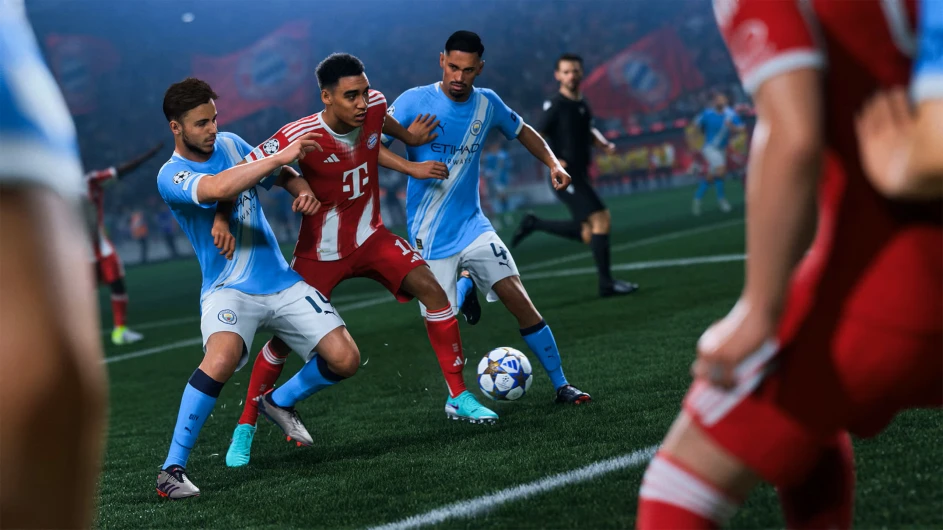
FC 26 is not always fair in pure 1v1s, especially against elite dribblers. So you should absolutely look for ways to shift the odds in your favor. The best way to do this is using second man press (R1/RB) to bring a midfielder into the play.
The key is using it smartly. You don’t want your second center-back rushing out because that opens your defense completely. Instead, you want midfield pressure. When done correctly, second man press creates a trap: you block the direct route with your controlled defender while your AI teammate applies pressure from the side.
The “Double-Layer Defense” Technique (Pro-Level Method)
One of the most effective defensive tactics in FC 26 is what you can call the double-layer method. Instead of controlling the defender closest to the ball carrier, you switch away and control a central defender or midfielder who blocks passing lanes.
While you do that, you activate second man press to keep pressure on the ball carrier. This creates a situation where the attacker feels pressured but also has no obvious passing option. It becomes extremely difficult for them to break through because they can’t dribble freely, and they can’t easily pass forward.
This technique is incredibly strong because it reduces the risk of you getting cooked in a direct 1v1 while still keeping your defense compact and controlled.
Defending in FC 26 is About Discipline, Not Speed
If there’s one message every FC 26 player needs to understand, it’s this: defending is not about being aggressive. It’s about being disciplined. The attacker wants you to panic. They want you to sprint jockey into the wrong direction. They want you to dive into tackles.
But once you master jockey, understand spacing, and stop overcommitting, the entire game changes. Suddenly, left stick dribblers don’t feel unstoppable anymore. You start forcing predictable moves. You start winning clean tackles. And most importantly, you stop conceding those embarrassing “how did that happen?” goals.
In FC 26, the best defenders aren’t the fastest players, they’re the calmest ones.
We will share more updates on FC 26 in separate articles. If you found this information helpful or would like to learn more, please explore the other articles on our site.
FC 26 Meta Update: The New Passing Patch, Defensive PlayStyle Shift, and Why 4-4-1-1 Is Taking Over