




 5735
5735 0
0 0
0Mastering the Low-Driven Cross in FC 26: The Cutback Technique Every Player Needs (Gameplay Tutorial)

Kalle Reinhard


- Why the Low-Driven Cross Works (And Why Defenders Hate It)
- How to Perform the Low-Driven Cross (Inputs & Timing)
- Controlling Power & Avoiding Common Mistakes
- Best Situations to Use the Low-Driven Cross
- A Real-Match Example of the Low-Driven Cross
If you’re looking for a mechanic that turns tight matches into easy wins, it’s time to master the most dangerous cutback weapon in FC 26, the Low-Driven Cross. This technique is flat, lightning-fast, and creates scoring chances defenders simply can’t react to. Unlike floating high crosses that give the backline time to reset, the Low-Driven Cross slices across the grass like a guided pass. For players who love quick breaks, sharp finishes, and punishing chaotic defensive shapes, this mechanic becomes your biggest advantage. Today, we’ll break down how it works, how to execute it properly, and the exact in-game situations where the Low-Driven Cross becomes completely unstoppable.

Why the Low-Driven Cross Works (And Why Defenders Hate It)
Regular high crosses are predictable. They float, they hang, and goalkeepers love them because they’re easy to punch or claim. Defenders have time to reposition themselves and challenge for the header. The Low-Driven Cross completely disrupts this dynamic. Instead of going into the air, the ball stays glued to the grass, forcing goalkeepers to dive rather than comfortably catch. That split-second change in animation makes a massive difference in scoring probability.
Even more importantly, the Low-Driven Cross arrives instantly. There’s no arch, no waiting, no extra travel time. It hits directly at the striker’s feet, setting them up for a clean first-time tap-in. No awkward headers, no messy volleys, no timing delays, just pure, high-percentage finishing. Because you eliminate the randomness of aerial duels, your finishing success rate skyrockets.
How to Perform the Low-Driven Cross (Inputs & Timing)
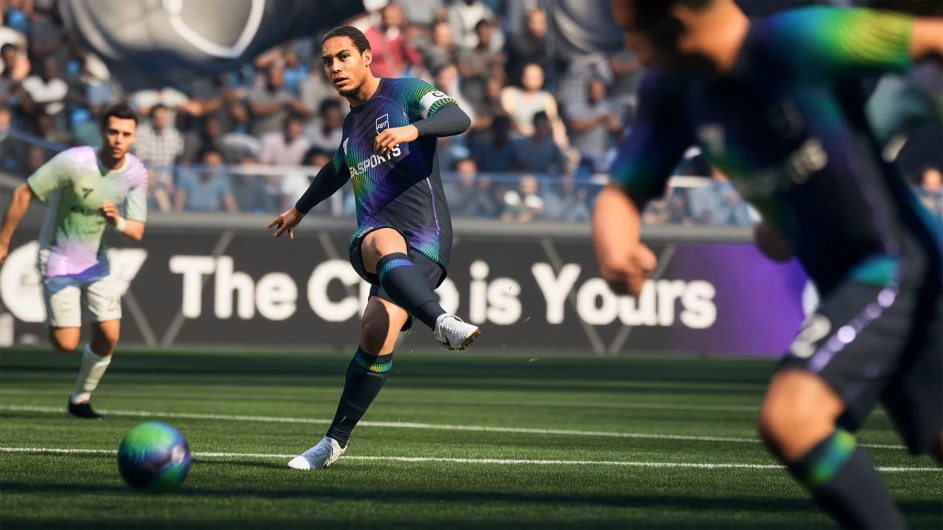
To execute the Low-Driven Cross, hold R1 + L1 on PlayStation (or RB + LB on Xbox), press the cross button once to charge, then hit it again for the driven effect. The mechanic looks simple, but the challenge lies in the aiming. Unlike normal crosses that often auto-lock onto nearby attackers, the Low-Driven Cross is largely manual. Your left-stick direction determines exactly where the ball travels. If you aim carelessly, the ball will completely miss your target.
But this manual control also gives you elite-level flexibility. Instead of being stuck passing to the nearest attacker, you can choose to send the ball toward a secondary runner arriving from behind. You can bypass a marked striker and instead hit the late-arriving midfielder. This makes the Low-Driven Cross unpredictable and incredibly difficult to defend when executed properly.
Controlling Power & Avoiding Common Mistakes
Power control is a key factor in perfecting this mechanic. Most players instinctively overpower it, but that ruins the entire technique. If you cross above three bars, the ball becomes a rocket that your striker cannot reach in time. The sweet spot is between 1.5 and 2.5 bars, just enough speed to zip across the box without spiraling out of control. This balance creates the perfect tap-in setup at either the near post or the penalty spot.
Once again, your left-stick aim matters more than anything else. Accurate direction means the ball finds the right player even when the box is crowded. A slight upward tilt can target a secondary attacker, while a downward angle may hit a near-post runner. Mastering these subtle angles turns the Low-Driven Cross into one of the most powerful attacking mechanics in FC 26.
Best Situations to Use the Low-Driven Cross
There are two standout situations where this cross becomes almost guaranteed. The first is when you beat the last defender and reach the byline. As you approach the goal line, scan for a teammate running toward the penalty spot or the edge of the 6-yard box. Trigger the Low-Driven Cross quickly and let the ball zip across the turf. Because defenders have zero time to adjust, your attacker gets a near-perfect finishing opportunity.
The second scenario is during sudden cutbacks. When your opponent aggressively blocks your wide angle, turning back inside opens up a brand-new passing lane. A Low-Driven Cross from this angle is devastating because defenders are mid-movement, trying to recover. Even if your striker cannot shoot first-time, the controlled touch will still create a massive scoring opportunity because of how perfectly the ball arrives.

A Real-Match Example of the Low-Driven Cross
Picture this: you’re surging down the right wing, and your opponent commits to covering the wide run. You instantly cut inside, forcing the defender into a recovery switch. That moment of confusion opens the passing lane toward your striker. A normal cross won’t help, especially if your striker is short or lacks aerial strength. But a Low-Driven Cross? Perfect.
You hit the input, aim precisely, and fire the ball across the ground. It lands directly in front of your striker, lining him up for a first-time Low-Driven shot. The goalkeeper has no chance because the ball arrives too quickly and too accurately. This is the exact type of scenario where the Low-Driven Cross destroys compact defenses and turns simple wing pressure into guaranteed goals.
We will share more updates on FC 26 in separate articles. If you found this information helpful or would like to learn more, please explore the other articles on our site.
The Drag Back Masterclass: The Easiest Way to Create Space & Score Inside the Box in FC 26
FC 26 Joga Bonito Promo – Full Player List & Top 10 Official Stats Breakdown